Your heart beats faster. Even if you sit still.
Stumbling in the chest. The heart that beats noticeably at night, even though you lie quietly. A blood pressure that was “a little too high” at the last check. Slightly put aside individually — but together, the kind of signals you better not miss.
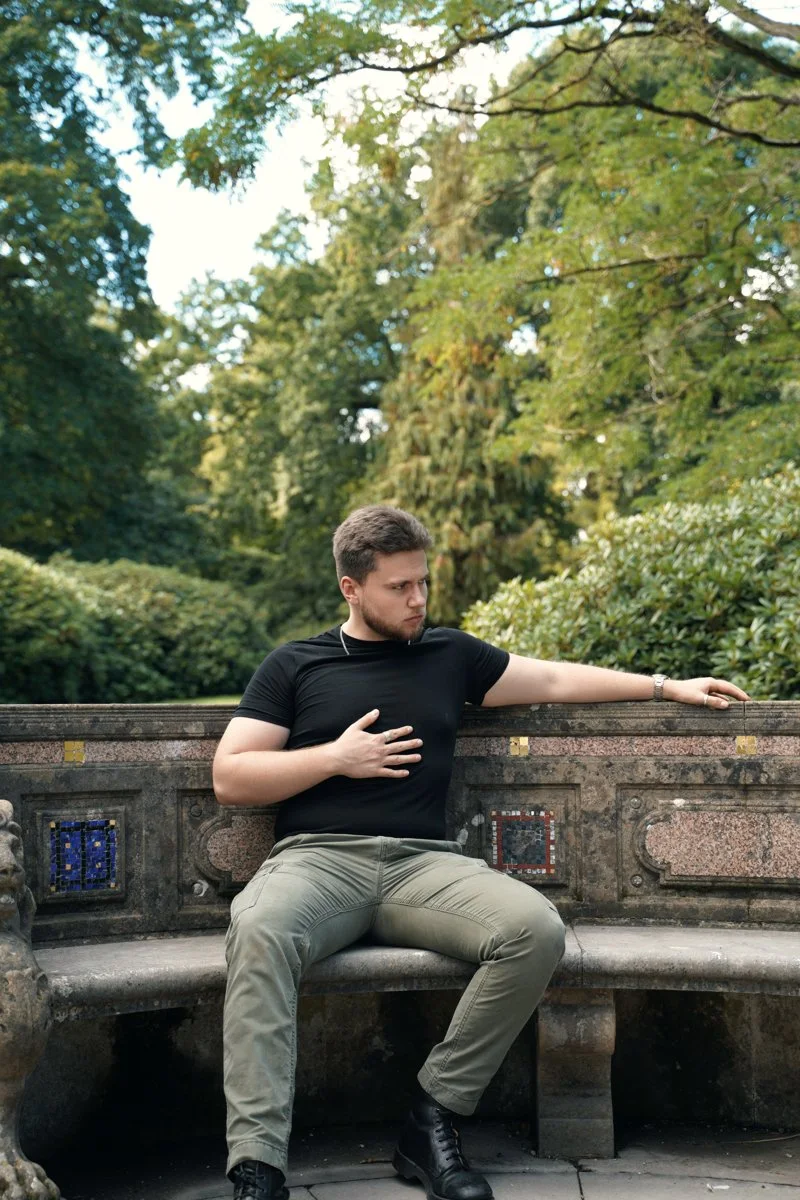
What makes permanent pressure with the heart.
Under stress, the body keeps the heart and circulation permanently at elevated levels: more pulse, higher blood pressure, narrower vessels. Makes sense in the short term — in the long run, wear that runs quietly. The blood pressure does not hurt, the vessels change slowly, the heart works against a resistance that no one notices.
In addition, what increases the pressure: poor sleep, too little movement, the one glass too much, the weight in the middle of life. Each factor on its own would be manageable. Together, they create a risk that you should know – because almost everything can be changed if you see it in time.
This is not a test and a diagnosis. But if you have nodded at several points, it is worth once to have accurate measurement of what really happens at night.
Typical Questions and Observations
These indications are not self-diagnosis. They help to arrange the personal concern for a specialist discussion.
- Your heart beats or stumbles noticeably – even at rest or at night.
- At the last check your blood pressure was "a little too high" - it remained.
- You get out of breath faster than before, under strain you knew.
- You occasionally feel a pressure or tightness in the chest.
- Your last thorough heart check was years ago — or there never was.
- There have been heart attacks or strokes in your family.
Why people who wear a lot?
Those who carry a lot on their shoulders often combine exactly the combination that the heart demands the most: chronic stress, little exercise, irregular meals, too short a sleep, often a few pounds too much. And they have a habit of passing over warning signs — because there is no time, because it will already pass.
The typical reaction is to go ahead and hope. But the heart does not negotiate. The good news is that if you look early, you have almost all the options – blood pressure, vessels, risk can usually be influenced excellently at this stage. Care is not a luxury here, but the smartest investment ever.
No guess. One finding.
At re:NOW we do not advise. We get a complete picture of your cardiovascular system: blood pressure courses throughout the day, ECG at rest and under stress, the condition of your vessels, your blood and metabolic values - and how stress and sleep play into it. Risks become visible long before they become apparent.
These answers create a clear picture of your risk – and a concrete way to reduce it: through exercise, diet, stress regulation and, where necessary, targeted treatment. Accompanied by doctors who listen instead of handling.
In a place where your heart comes to rest: the Kloster Beuerberg on Lake Starnberg.
Good to
know.
Cardiac Stumbling and Pulling Under Stress — Is It Dangerous?
Often such complaints are harmless and stress-related – but this can only clarify an examination, not your own gut feeling. Precisely because cardiovascular problems are silent for a long time, it is wise to have them clarified by a doctor instead of pushing them away. Security is more valuable here than assumption.
My blood pressure is “somewhat elevated” — do I need to worry?
Permanently elevated blood pressure is one of the biggest and at the same time most easily overlooked risk factors – it does not hurt and often goes unnoticed for years. The good news: Recognized early, it can usually be influenced very well, often without permanent medication. The key is to look before it does harm.
What is cardiovascular diagnosis in re:NOW?
We get a complete picture: blood pressure courses, ECG at rest and under stress, vascular status, blood values, plus the influence of stress and sleep. In this way, we identify risks before they become apparent – and can take targeted countermeasures with exercise, nutrition, stress regulation and, where necessary, targeted treatment.
Does anyone know I was there?
No. Discretion is the foundation. No guest lists, no external diagnosis, no more than fifteen guests at a time. Whoever is here is invisible.